Git-Watcher — GitHub activity on an ESP32
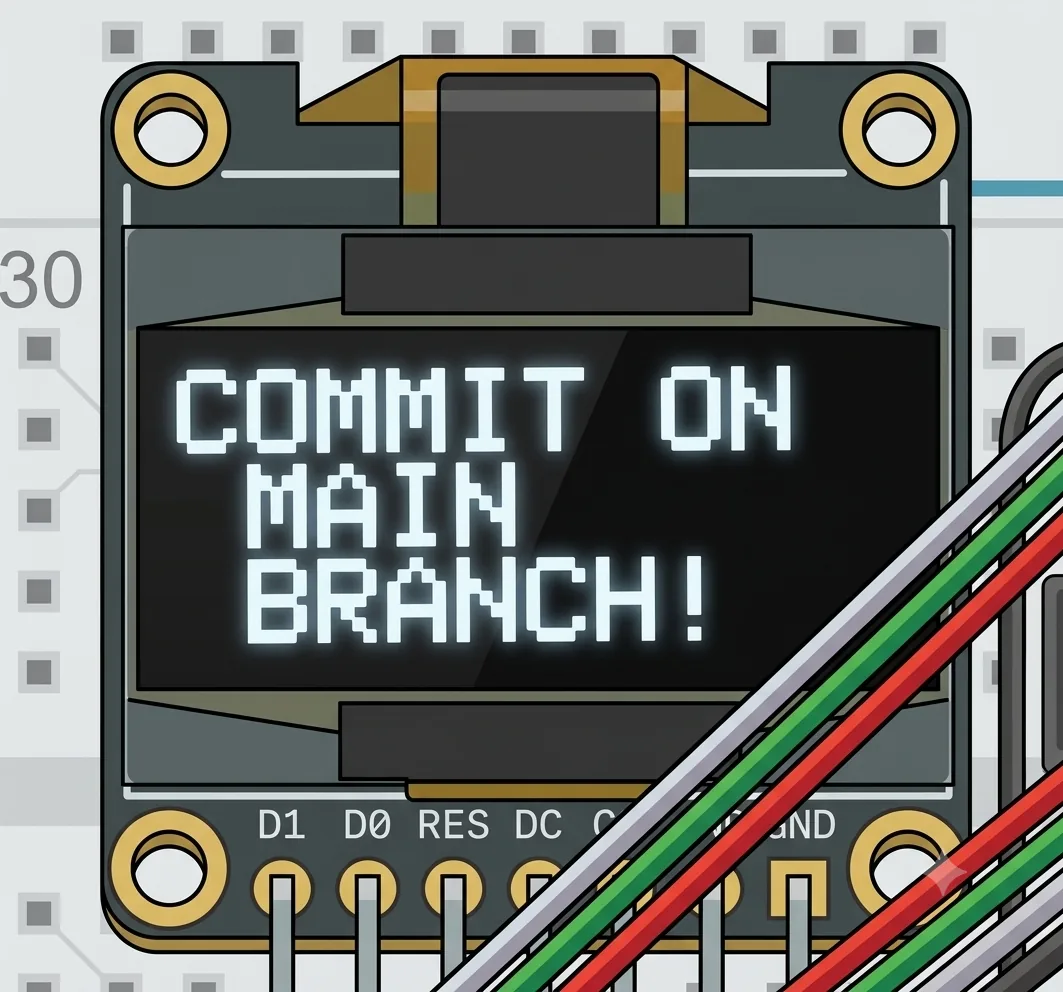
$ git push
   ...
[esp32] ◀── webhook ── github   "push received"
Most of the systems I work on are invisible — events fly between services and you only see them in logs. Git-Watcher is the opposite: a little ESP32 on my desk that physically reacts when something happens on a GitHub repo. It’s a hardware hack, and also an excuse to take webhooks apart and really understand them.
How it works
GitHub ──webhook──▶ ngrok tunnel ──▶ ESP32 (:80) ──▶ display
The ESP32 runs a tiny HTTP server on port 80. GitHub fires a webhook on repo events, an ngrok tunnel exposes the device’s local address to the internet, and the board parses the incoming payload and shows it.
The whole firmware is one main.ino in C++ — connect to WiFi, listen for POSTs,
read the event, react. Setup is deliberately blunt: flash the board, read the
local IP off the display, point an ngrok tunnel at it, paste the URL into
GitHub’s webhook settings. Done.
The honest part
ngrok is a development tunnel, not production plumbing. It’s perfect for a desk toy — zero infra, instant public URL — but it’s not how I’d ship this for real.
Why I built it
Event-driven systems are the backbone of modern infrastructure — webhooks, queues, pub/sub. Building a device that sits at the receiving end forced me to understand the full path: what GitHub actually sends, how to receive it, how to expose a private endpoint to a public sender, and where that approach breaks.
The best way to learn a protocol is to build the thing on the other end of it.
It’s a small board blinking at git push. It’s also a hands-on map of how an
event gets from a service in the cloud to a box on your desk.